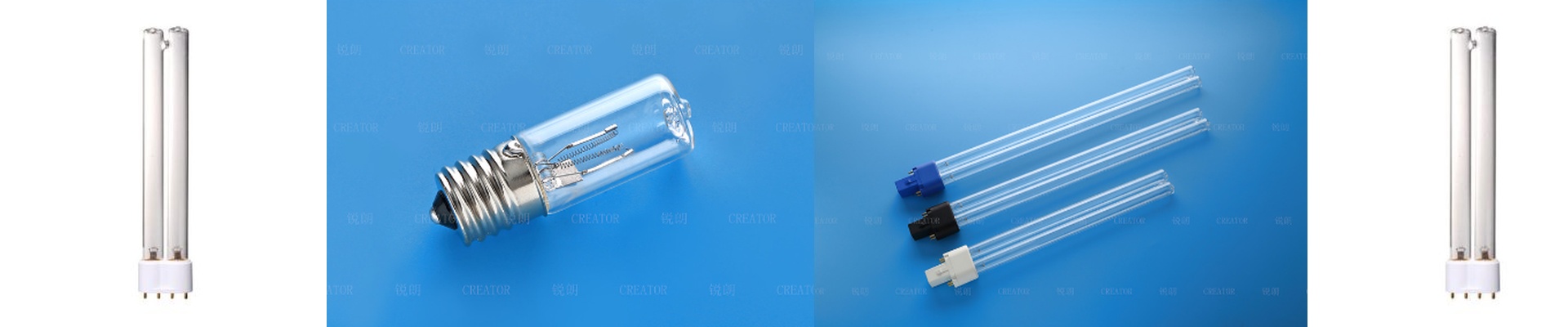

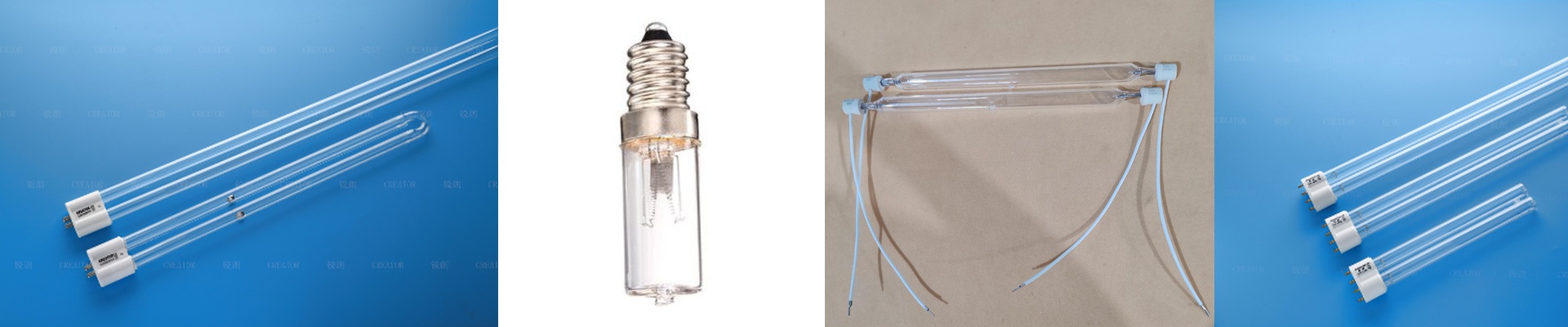


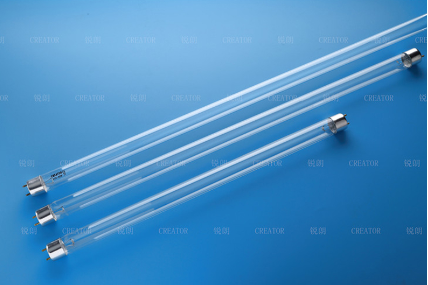
On the press, the line between a job that ships on time and one that gets stuck in rework often comes down to how the UV system behaves electrically. You can spec the lamp length and the arc gap, but if the power supply can’t be tuned to your machine’s power curve, you’re flying blind. The lamp’s internal voltage has to be adjustable to match the equipment it’s running on. Otherwise you end up chasing cure failures that look like ink issues but are really electrical mismatches. That’s why we build constant current UV lamp power supplies around adjustability and repeatability. We match the power curve first, then lock it down so every shift sees the same spectral output, the same peak irradiance, and the same energy density at the substrate.
What matters, technically
Constant current operation isn’t a slogan—it’s a measurable way to run the lamp. A mercury vapor UV lamp has a negative resistance characteristic: once the arc strikes, current can run away quickly. Without a constant current driver, that runaway current makes spectral output unstable and accelerates electrode erosion. With constant current, we hold lamp current steady, which stabilizes plasma temperature and keeps spectral output consistent across the entire cure window. Here are the parameters you can actually measure and control:
- Wavelength and spectral output:High-pressure mercury vapor lamps are built around strong emission lines at365 nm,313 nm, and385 nm, with additional energy around405 nm. The 365 nm line drives cross-linking deeper into the ink layer; the shorter 313 nm line contributes to surface cure; the longer lines support photoinitiator response in formulations tuned for 385–405 nm. We tune the lamp fill and arc gap to emphasize the line set your ink chemistry needs, then keep that output stable.
- **Peak irradiance and power density:**Peak irradiance (mW/cm²) determines how fast the surface hits the energy threshold for polymerization. Power density (W/cm²) reflects total energy delivered over the dwell. Our constant current supply prevents current dips and surges that show up as irradiance dips at the substrate.
- **Curing speed and energy density:**Cure isn’t “on/off.” It’s a function of energy density (mJ/cm²) delivered within the dwell time. When the power supply holds stable current, lamp output stays stable, so you can set a repeatable speed and get the same degree of cross-linking from the first sheet to the thousandth.
- **Light output stability:**On a press running 24/7, lamp output drift is the quiet saboteur. Constant current control removes the main driver of drift—current instability—so the lamp holds a flatter output curve over time. Match that with a properly matched reflector and consistent cooling, and you get stable cure even when temperature and line voltage move around.
- **Lamp life and degradation curve:**Electrode wear and quartz blackening happen, but unstable current makes them happen faster. We design the supply to keep the lamp inside its rated current window, which flattens the degradation curve and extends usable life. We’ve got units running 5,000+ hours with less than 5% output drop when maintained correctly.
- **Voltage adjustability:**This is where the customization happens. We can adjust the lamp’s internal voltage to match your machine’s power curve, so the driver isn’t fighting the lamp or the press electrical architecture. The result is a matched system—lamp, reflector, and power supply—not a pile of parts that happen to sit together.
Why this approach works in the real shop
Customization isn’t just about physical dimensions. It’s about aligning the UV system’s electrical behavior to the press or line it’s running on. In your shop, the machine has a fixed bus voltage, a specific conductor path, and a defined thermal envelope around the lamp housing. If the lamp’s operating voltage doesn’t match that envelope, you get one of two outcomes: under-driven lamps that never hit target irradiance, or over-driven lamps that shorten electrode life and create unstable cure. We solve that by making the lamp’s internal voltage adjustable during commissioning. We map the power curve, tune the lamp to sit at its intended operating point, then lock it in with a constant current supply that holds the setpoint. What you end up with:
- **Faster cycles without cure defects:**With stable peak irradiance, you can push higher press speeds without undercured surface layers or adhesion failures. You’re not guessing at speed limits—you’re setting them based on measured energy density.
- **Consistent quality, shift after shift:**Same spectral output, same energy density, same cure profile. That means consistent hardness, adhesion, and chemical resistance across jobs.
- **Lower energy use and fewer lamp changes:**A matched system runs efficiently—less wasted heat, less unnecessary current, less stress on the lamp. That cuts energy draw and extends lamp life, lowering both electricity and spare parts cost.
- **Electrical compatibility by design:**We align the lamp’s internal voltage to your machine’s power curve so the system integrates cleanly. No more trying to force a catalog lamp into a custom electrical envelope and hoping it behaves.
The practical details you can’t skip
Matching a UV system to your press is straightforward, but it needs planning.
- **Reflector and cooling have to match the output envelope.**Changing voltage and current changes the lamp’s heat load. If reflector geometry and cooling capacity aren’t matched, you’ll get hot spots, uneven irradiance, and shortened lamp life. We review the full assembly—lamp, reflector, cooling, and shutter path—before finalizing the electrical setpoint.
- **Connector compatibility and wiring practice matter.**We can supply connectors and terminal configurations to match your machine, but the install has to respect current ratings and thermal routing. Poor connections add resistance, which adds heat and variability in current delivery.
- **Lamp orientation and ozone management are non-negotiable.**Orientation affects both spectral output and ozone generation. We use ozone-free quartz envelopes where appropriate and specify orientation and exhaust routing to keep ozone away from operators and sensitive components.
- **Measurement sets the baseline.**To tune the system, we use spectral radiometry to quantify wavelength distribution, peak irradiance, and energy density at the substrate plane. If your facility doesn’t routinely measure these, we include commissioning measurement and give you a baseline you can repeat. If you want repeatable curing at production speeds, start with the power curve and make the lamp’s internal voltage adjustable. A constant current UV lamp power supply does the hard work of stabilizing the plasma, so your process becomes predictable, measurable, and repeatable. Tell us your press model, your ink chemistry, and your target cure profile. We’ll match the power supply, tune the lamp, and deliver a system that cures the way your line needs it to.