
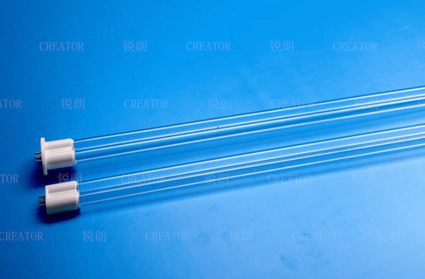
Fixing the Blind Spot in 80W/cm UV Systems
Standard 80W/cm mercury UV lamps are the heavy lifters of the industrial world. They do the dirty work of curing and sterilization every single day. But there’s a frustrating problem we’ve all dealt with: once those tubes are wired into a production line, you’re basically flying blind. You just have to trust they’re working. And usually, the only way you find out they aren’t? Your product fails a quality check. By then, it’s already too late. The balancing act of high power Pushing 80W per centimeter is a bit of a tightrope walk. If the ballast control isn’t spot on, you’ll burn the tube out way too early. We spend a lot of time tweaking the arc voltage and current just to keep that plasma discharge stable. Why go through all that trouble? Because on high-speed lines, you don’t have time to waste. You need a massive hit of photons to lock those polymers in place or kill off microbes in a matter of seconds. It has to be fast. Stop guessing, start knowing The real shift here isn’t about the glass or the mercury itself. It’s about how we track the power. We’ve started putting current-sensing transformers and digital transducers right into the ballast circuit. Now, instead of wondering if a lamp is still hitting its mark, you can just check a dashboard from across the room. Here’s why that matters: as electrodes wear down, the energy profile starts to drift. It’s a slow fade. With remote monitoring, you can see that decay happening in real-time. You can swap the tube before the UV intensity dips below your limit. No more relying on a timer and hoping for the best. The messy reality of the shop floor Of course, it’s not all magic. Adding IoT sensors means your control cabinet gets a bit more crowded. Plus, high-voltage starters love to create electromagnetic interference. It can make your data look like a jagged mess. We fix that with shielded twisted-pair cabling to keep the signal clean. And a quick heads-up: no amount of “smart” monitoring can save a lamp if your cooling isn’t up to the task. If an 80W/cm array runs too hot, that quartz envelope is going to give up the ghost regardless of what your dashboard says. Keep it cool, and the tech does the rest.