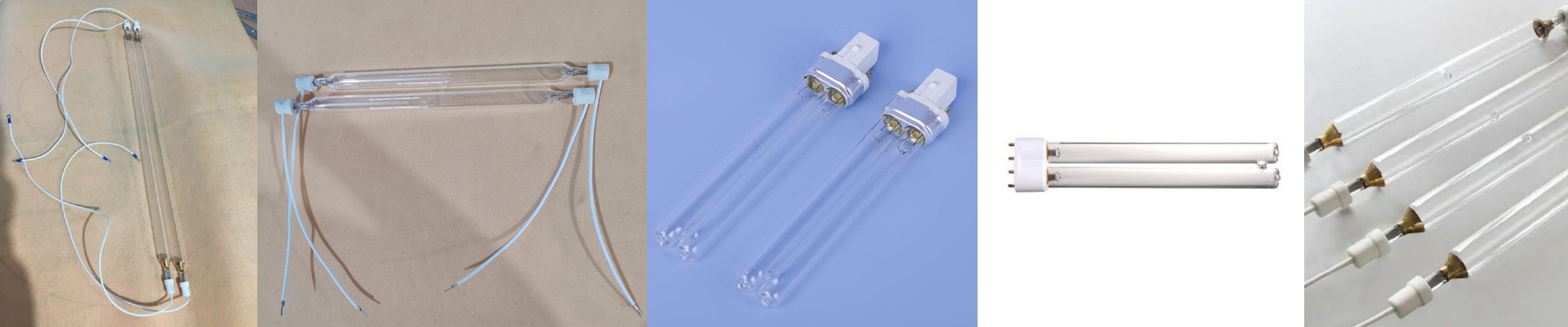
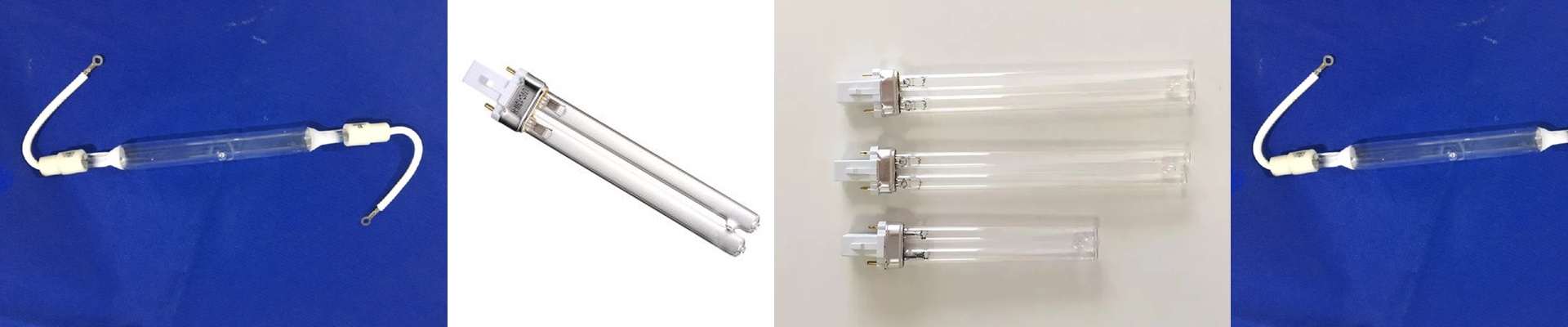
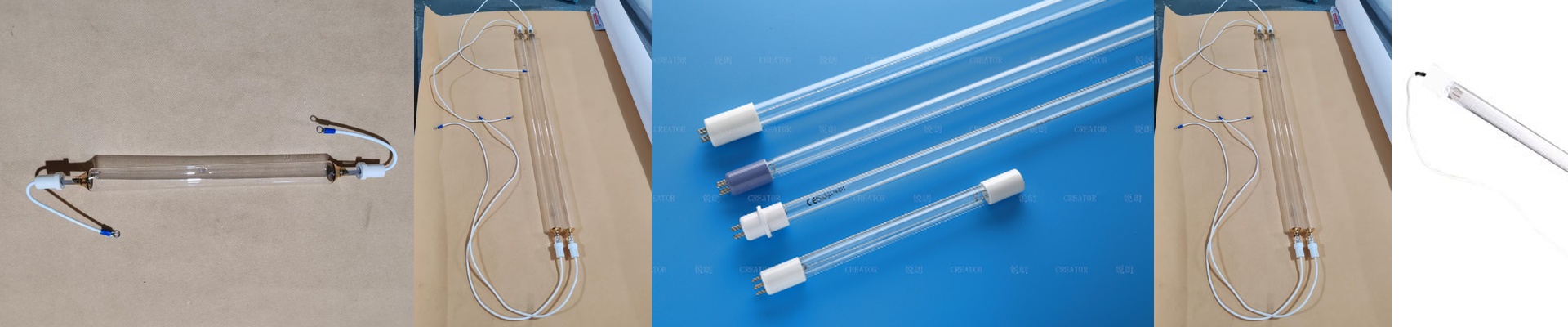
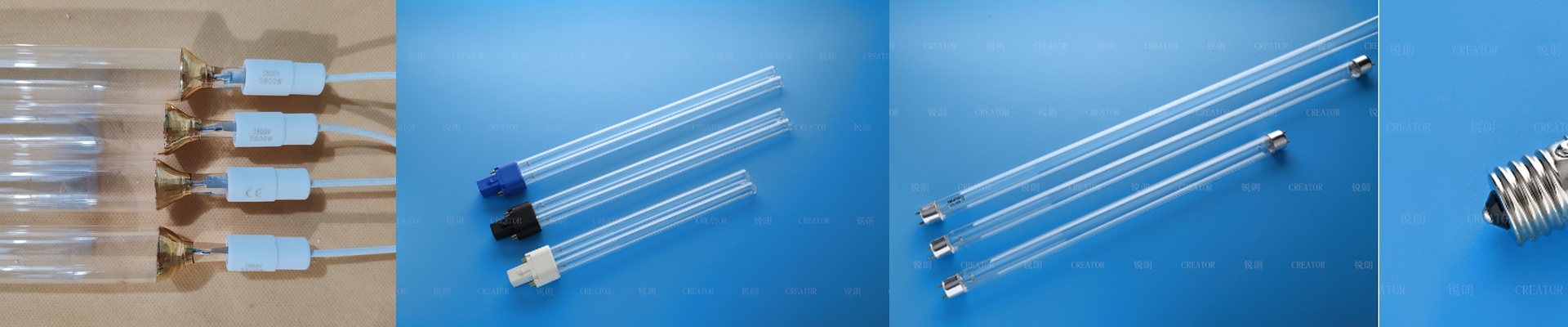

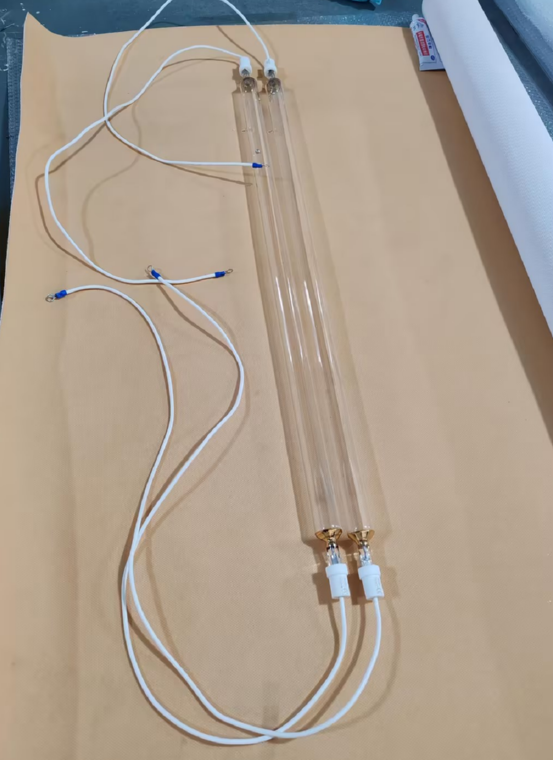
On the factory floor, the medical speaker line can’t afford a disinfection miss. One under-dosed surface, a shadowed seam, or a drift in dwell time, and you’re staring at a failed microbial validation. Meanwhile, the clock keeps running while rework piles up. You’re running a cleanroom-adjacent cell where cycle time is tight, space is at a premium, and every cycle has to hit a documented kill claim. If UVC output drifts or the spectrum carries useless tails, you’re not just burning energy — you’re gambling with compliance. What matters, technically UVC disinfection is all about dose, and dose is irradiance multiplied by time. For medical-grade work, the lamp has to deliver stable 254 nm output with tight spectral control. The germicidal action is centered on 254 nm; anything else gives you heat, not predictable microbial inactivation. We build our CE-certified UVC lamps around a low-pressure mercury vapor discharge. The primary line sits at 254 nm, with a smaller line at 185 nm. In practice, 185 nm makes ozone unless the envelope chemistry is controlled. We use ozone-free quartz formulations and coatings to suppress that line where it isn’t wanted, keeping chamber ozone below measurable thresholds. Spectral purity isn’t a buzzword. It’s the ratio of useful 254 nm output to total radiant flux. High spectral purity means fewer wasted photons and less parasitic heat that can warp thin plastics or stress adhesive bonds in speaker housings. We hold tight tolerances on discharge chemistry and bulb wall temperature, so the output curve stays stable over lamp life. Here are the metrics you can measure on the bench and verify in the field:
- Peak irradiance at the working distance — typically 10–50 mm for small assemblies — measured in mW/cm². We specify values at defined distances so you can map your dose profile across the part.
- Dose, in mJ/cm², which is irradiance × exposure time. Many medical disinfection protocols require tens of mJ/cm², and the lamp has to deliver that consistently across the entire surface, including edges and seams.
- Spectral output: we provide spectral radiometer data centered on 254 nm with a narrow full width at half maximum (FWHM), minimizing out-of-band radiation that adds heat without adding disinfection value.
- Lamp life and stability: we target thousands of hours with controlled output decay, and we publish the degradation curve so you can schedule maintenance without surprises. Output stays stable over the rated life when operated within the specified current and wall temperature range.
- Reflector efficiency: elliptical or parabolic reflectors with dichroic coatings shape the beam and return stray photons to the target plane. That increases delivered dose without raising input power, improving energy efficiency and smoothing out hot spots. The electrical and mechanical details matter just as much. We offer standard voltages and connector types to drop into your fixtures, and we provide dimensional envelopes to match your reflector housing and cooling path. These lamps are built for continuous duty, with arc stability that tolerates frequent on/off cycles without a significant output drop. Why this works for medical speaker assembly Disinfection here has to be repeatable across complex geometries, sensitive materials, and strict cleanliness requirements. Our UVC lamps are specified to deliver the right 254 nm flux density at the working distance you actually run — not the theoretical maximum on a datasheet. That means you can shorten exposure time and still meet kill claims, or keep your cycle time and build margin into the dose budget. In practice, you get:
- Consistent microbial reduction across the entire part surface, including seams and mounting features, because the beam profile and irradiance map are predictable.
- Lower thermal load on ABS, PC, and composite housings, reducing warpage risk and protecting adhesive joints.
- Stable output over the life of the lamp, so validation runs stay valid and you don’t have to requalify after every lamp change.
- Energy use that tracks to dose, not to waste heat. With reflector efficiency and controlled spectrum, you’re paying for photons that do the job. Because this is medical, the lamps are CE certified and built to support documented processes. You can integrate them into validated disinfection cycles with traceable parameters: lamp current, wall temperature, irradiance map, and dwell time. The output is compatible with standard radiometric measurement practices, so your team can verify performance with a spectral radiometer and keep the process under statistical control. This isn’t a general-purpose lamp repurposed for disinfection. It’s a medical-grade UVC tool, engineered to hit a target measured in mJ/cm² and enforced by compliance. The things you need to keep straight UVC systems are powerful, and they deserve the same discipline as any other critical process tool.
- Geometry and shadowing: UVC is line-of-sight. Complex speaker assemblies create shadows. Map the irradiance distribution, and design fixturing or rotation to expose those shadowed areas. Dose uniformity is your responsibility; the lamp provides the output, not the coverage pattern.
- Distance square law: Irradiance drops with the square of distance. Lock down the working distance early, and hold it. Small changes in part-to-lamp distance can swing dose significantly.
- Thermal management: Even with high spectral purity, UVC sources generate heat. Provide adequate airflow or active cooling to keep the lamp envelope and reflector within the rated temperature window. Overheating shortens lamp life and shifts the output spectrum.
- Material compatibility: Prolonged UVC exposure can degrade some polymers and optical components. Validate compatibility on your specific housings, gaskets, and optical windows. If you see discoloration or embrittlement, adjust dose or add protective shielding.
- Lamp handling and maintenance: Treat UVC lamps like precision instruments. Wipe with isopropyl alcohol only, avoid touching the bulb, and install with the correct torque and alignment. Keep a log of operating hours and output checks. Plan replacements based on rated life and your measured stability data. If your goal is medical-grade disinfection with predictable, verifiable performance, start with the spectral purity and dose delivery that a CE-certified UVC lamp is built to provide. Measure it. Control it. Document it. That’s how you keep the line moving and the validation intact.