


Getting That 0.5% Sweet Spot with Gallium Iodide UV Lamps
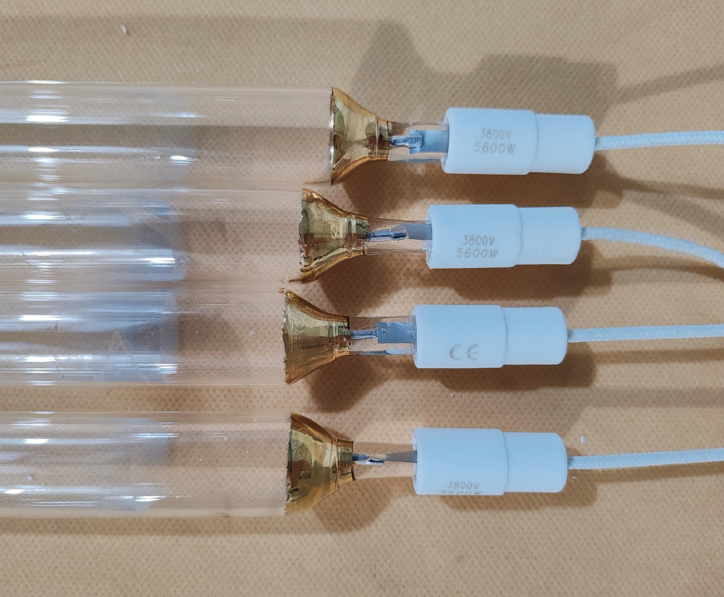
Most UV lamps are a bit messy. They throw out a broad spectrum of light, which is fine for some things, but if you’re running a high-precision industrial line, that spread is just noise. It gets in the way. We spent our R&D time obsessing over Gallium Iodide (GaI) chemistry for one reason: we wanted to shrink that window. We were aiming for a spectral energy concentration within a 0.5% tolerance. Here is how we actually did it. It turns out the shape of the bulb doesn’t really matter. What matters is the purity of the GaI fill and the pressure we lock inside the quartz envelope. If the gas mix is off by even a tiny fraction, the peak drifts and you lose your precision. We spend a lot of time calibrating that internal pressure just to keep the wavelength from moving. But there’s a trade-off. When you cram that much energy into such a narrow band, things get hot. Really hot. We use high-purity synthetic quartz so the glass doesn’t “solarize”—that’s the annoying clouding effect that kills your UV output over time. Just a heads-up: you’ll notice the tube runs warmer than a standard lamp. Because the thermal load is concentrated on a smaller area, your cooling jigs need to be up to the task. If they aren’t, the quartz might just snap from the stress. A few things to keep in mind for your setup. These aren’t parts you just grab off a shelf. We build them to fit your specific footprint so the beam hits exactly where it needs to, without wasting energy on scatter. We’ve stripped away all the fluff. You lose the versatility of a broad-band lamp, but in exchange, you get a tool that does one thing perfectly: it delivers concentrated UV energy at a precise wavelength. One last tip. If your voltage is jumpy, your spectral peak will jump too. Stick with a stabilized power supply if you want to keep that 0.5% tolerance steady across your entire production run.